

Practice FCP_FAZ_AN-7.4 Questions With Certification guide Q&A from Training Expert NewPassLeader
Free Fortinet FCP_FAZ_AN-7.4 Test Practice Test Questions Exam Dumps
Fortinet FCP_FAZ_AN-7.4 Exam Syllabus Topics:
| Topic | Details |
|---|---|
| Topic 1 |
|
| Topic 2 |
|
| Topic 3 |
|
| Topic 4 |
|
| Topic 5 |
|
NEW QUESTION # 22
Refer to the exhibit.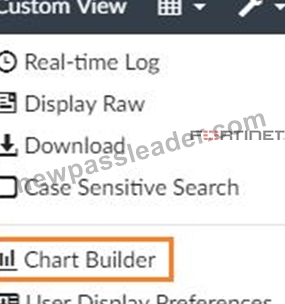
What is the purpose of using the Chart Builder feature on FortiAnalyzer?
- A. In Log View, this feature allows you to build a dataset and chart automatically, based on the filtered search results.
- B. In Log View, this feature allows you to build a chart and chart automatically, on the top 100 log entries.
- C. This feature allows you to build a chart under FortiView.
- D. You can add charts to generated reports using this feature.
Answer: A
NEW QUESTION # 23
Which two statements regarding FortiAnalyzer operating modes are true? (Choose two.)
- A. When running in collector mode, FortiAnalyzer can forward logs to a syslog server.
- B. FortiAnalyzer runs in collector mode by default unless it is configured for HA.
- C. You can create and edit reports when FortiAnalyzer is running in collector mode.
- D. A topology with FortiAnalyzeer devices running in both modes can improve their performance.
Answer: B,D
Explanation:
FortiAnalyzer has two primary operating modes:Analyzer modeandCollector mode. Each mode serves specific purposes and has distinct capabilities.
* Option A - Forwarding Logs to a Syslog Server in Collector Mode:
* In Collector mode, FortiAnalyzer collects logs from Fortinet devices but does not process or analyze them. Instead, it forwards the logs to other FortiAnalyzer units in Analyzer mode or to specific storage locations. However, forwarding logs to a syslog server is not a function of Collector mode. Logs are generally stored or sent to other FortiAnalyzer devices.
* Conclusion:Incorrect.
* Option B - Default Mode is Collector Mode Unless Configured for HA:
* When a FortiAnalyzer is initially set up, it runs in Collector mode by default unless it is configured as part of a High Availability (HA) setup, which would set it to Analyzer mode.
Collector mode prioritizes log collection and storage rather than analysis, offloading analysis to other devices in the network.
* Conclusion:Correct.
* Option C - Report Creation and Editing in Collector Mode:
* In Collector mode, FortiAnalyzer does not have the capability to create or edit reports. This mode is focused solely on log collection and forwarding, with analysis and report generation left to FortiAnalyzer units operating in Analyzer mode.
* Conclusion:Incorrect.
* Option D - Performance Improvement with Both Modes in Topology:
* Deploying FortiAnalyzer devices in both Collector and Analyzer modes in a network topology can enhance performance. Collector mode devices handle log collection, reducing the workload on Analyzer mode devices, which focus on log processing, analysis, and reporting. This separation of tasks can optimize resource usage and improve the overall efficiency of log management.
* Conclusion:Correct.
Conclusion:
* Correct Answer:B. FortiAnalyzer runs in collector mode by default unless it is configured for HA andD. A topology with FortiAnalyzer devices running in both modes can improve their performance.
* These answers correctly describe the functionality and default configuration of FortiAnalyzer operating modes, along with how a mixed-mode topology can enhance performance.
References:
* FortiAnalyzer 7.4.1 documentation on operating modes (Collector and Analyzer) and their respective capabilities.
NEW QUESTION # 24
Which statement about sending notifications with incident update is true?
- A. If you use multiple fabric connectors, all connectors must have the same settings.
- B. Notifications can be sent only by email.
- C. Notifications can be sent only when an incident is updated or deleted.
- D. You can send notifications to multiple external platforms.
Answer: D
Explanation:
In FortiOS and FortiAnalyzer, incident notifications can be sent to multiple external platforms, not limited to a single method such as email. Fortinet's security fabric and integration capabilities allow notifications to be sent through various fabric connectors and third-party integrations. This flexibility is designed to ensure that incident updates reach relevant personnel or systems using preferred communication channels, such as email, Syslog, SNMP, or integration with SIEM platforms.
Let's review each answer option for clarity:
Option A: You can send notifications to multiple external platforms
This is correct. Fortinet's notification system is capable of sending updates to multiple platforms, thanks to its support for fabric connectors and external integrations. This includes options such as email, Syslog, SNMP, and others based on configured connectors.
Option B: Notifications can be sent only by email
This is incorrect. Although email is a common method, FortiOS and FortiAnalyzer support multiple notification methods through various connectors, allowing notifications to be directed to different platforms as per the organization's setup.
Option C: If you use multiple fabric connectors, all connectors must have the same settings This is incorrect. Each fabric connector can have its unique configuration, allowing different connectors to be tailored for specific notification and integration requirements.
Option D: Notifications can be sent only when an incident is updated or deleted This is incorrect. Notifications can be sent upon the creation of incidents, as well as upon updates or deletion, depending on the configuration.
NEW QUESTION # 25
Which two actions should an administrator take to vide Compromised Hosts on FortiAnalyzer? (Choose two.)
- A. Enable device detection on the FotiGate device that are sending logs to FortiAnalyzer.
- B. Subscribe FortiAnalyzer to FortiGuard to keep its local threat database up to date.
- C. Make sure all endpoints are reachable by FortiAnalyzer.
- D. Enable web filtering in firewall policies on FortiGate devices, and make sure these logs are sent to fortiAnalyzer.
Answer: A,D
Explanation:
To view Compromised Hosts on FortiAnalyzer, certain configurations need to be in place on both FortiGate and FortiAnalyzer. Compromised Host data on FortiAnalyzer relies on log information from FortiGate to analyze threats and compromised activities effectively. Here's why the selected answers are correct:
Option A: Enable device detection on the FortiGate devices that are sending logs to FortiAnalyzer Enabling device detection on FortiGate allows it to recognize and log devices within the network, sending critical information about hosts that could be compromised. This is essential because FortiAnalyzer relies on these logs to determine which hosts may be at risk based on suspicious activities observed by FortiGate. This setting enables FortiGate to provide device-level insights, which FortiAnalyzer uses to populate the Compromised Hosts view.
Option B: Enable web filtering in firewall policies on FortiGate devices, and make sure these logs are sent to FortiAnalyzer Web filtering is crucial in identifying potentially compromised hosts since it logs any access to malicious sites or blocked categories. FortiAnalyzer uses these web filter logs to detect suspicious or malicious web activity, which can indicate compromised hosts. By ensuring that FortiGate sends these web filtering logs to FortiAnalyzer, the administrator enables FortiAnalyzer to analyze and identify hosts engaging in risky behavior.
Let's review the other options for clarity:
Option C: Make sure all endpoints are reachable by FortiAnalyzer
This is incorrect. FortiAnalyzer does not need direct access to all endpoints. Instead, it collects data indirectly from FortiGate logs. FortiGate devices are the ones that interact with endpoints and then forward relevant logs to FortiAnalyzer for analysis.
Option D: Subscribe FortiAnalyzer to FortiGuard to keep its local threat database up to date Although subscribing to FortiGuard helps keep threat intelligence updated, it is not a requirement specifically to view compromised hosts. FortiAnalyzer primarily uses logs from FortiGate (such as web filtering and device detection) to detect compromised hosts.
NEW QUESTION # 26
Which FortiAnalyzer feature allows you to use a proactive approach when managing your network security?
- A. Outbreak alert services
- B. FortiView Monitor
- C. Incidents dashboard
- D. Threat hunting
Answer: D
Explanation:
FortiAnalyzer offers several features for monitoring, alerting, and incident management, each serving different purposes. Let's examine each option to determine which one best supports a proactive security approach.
Option A - FortiView Monitor:
FortiView is a visualization tool that provides real-time and historical insights into network traffic, threats, and logs. While it gives visibility into network activity, it is generally more reactive than proactive, as it relies on existing log data and incidents.
Conclusion: Incorrect.
Option B - Outbreak Alert Services:
Outbreak Alert Services in FortiAnalyzer notify administrators of emerging threats and outbreaks based on FortiGuard intelligence. This is beneficial for awareness of potential threats but does not offer a hands-on, investigative approach. It's more of a notification service rather than an active, proactive investigation tool.
Conclusion: Incorrect.
Option C - Incidents Dashboard:
The Incidents Dashboard provides a summary of incidents and current security statuses within the network. While it assists with ongoing incident response, it is used to manage and track existing incidents rather than proactively identifying new threats.
Conclusion: Incorrect.
Option D - Threat Hunting:
Threat Hunting in FortiAnalyzer enables security analysts to actively search for hidden threats or malicious activities within the network by leveraging historical data, analytics, and intelligence. This is a proactive approach as it allows analysts to seek out threats before they escalate into incidents.
Conclusion: Correct.
Conclusion:
Correct Answe r : D. Threat hunting
Threat hunting is the most proactive feature among the options, as it involves actively searching for threats within the network rather than reacting to already detected incidents.
Reference:
FortiAnalyzer 7.4.1 documentation on Threat Hunting and proactive security measures.
NEW QUESTION # 27
Which statement about sending notifications with incident updates is true?
- A. You must configure an output profile to send notifications by email.
- B. Each connector used can have different notification settings
- C. Each incident can send notification to a single external platform.
- D. Notifications can be sent only when an incident is created oi deleted.
Answer: B
NEW QUESTION # 28
You need to upgrade your FortiAnalyzer firmware.
What happens to the logs being sent to FortiAnalyzer from FortiGate during the time FortiAnalyzer is temporarily unavailable?
- A. FortiAnalyzer uses log fetching to retrieve the logs when back online
- B. The logfiled process stores logs in offline mode
- C. Logs are dropped
- D. FortiGate uses the miglogd process to cache the logs
Answer: D
NEW QUESTION # 29
Refer to the exhibit with partial output: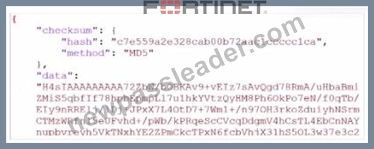
Your colleague exported a playbook and has sent it to you for review. You open the file in a text editor and observer the output as shown in the exhibit.
Which statement about the export is true?
- A. Your colleague put a password on the export.
- B. The export data type is zipped.
- C. The playbook is misconfigured.
- D. The option to include the connector was not selected.
Answer: B
Explanation:
In the exhibit, the data structure shows a checksum field and a data field with a long, seemingly encoded string. This format is indicative of a file that has been compressed or encoded for storage and transfer.
Export Data Type:
The data field is likely a base64-encoded string, which is commonly used to represent binary data in text format. Base64 encoding is often applied to data that has been compressed (zipped) for easier handling and transfer. The checksum field, with an MD5 hash, provides a way to verify the integrity of the data after decompression.
Option Analysis:
A . The export data type is zipped: Correct. The compressed and encoded format of the data suggests that the export is in a zipped format, allowing for efficient storage and transfer.
B . The playbook is misconfigured: There is no indication of misconfiguration in this exhibit. The presence of the checksum and data fields aligns with standard export practices.
C . The option to include the connector was not selected: There is no evidence in the output to conclude that connectors are missing. Connectors are typically listed separately and would not directly affect the checksum and encoded data structure.
D . Your colleague put a password on the export: There's no indication of password protection in the exhibit. Password protection would likely alter the data structure, and there would be some mention of encryption.
Conclusion:
Correct Answe r : A. The export data type is zipped.
This answer is consistent with the typical use of base64 encoding for compressed (zipped) data exports in FortiAnalyzer.
Reference:
FortiAnalyzer 7.4.1 documentation on exporting playbooks and data compression methods.
NEW QUESTION # 30
Which two statements are true regarding log fetching on FortiAnalyzer? (Choose two.)
- A. Log fetching allows the administrator to run queries and reports against historical data by retrieving archived logs from one FortiAnalyzer device and sending them to another FortiAnalyzer device.
- B. A FortiAnalyzer device can perform either the fetch server or client role, and it can perform two roles at the same time with the same FortiAnalyzer devices at the other end.
- C. Log fetching allows the administrator to fetch analytics logs from another FortiAnalyzer for redundancy.
- D. Log fetching can be done only on two FortiAnalyzer devices that are running the same firmware version.
Answer: A,D
NEW QUESTION # 31
Refer to the exhibit.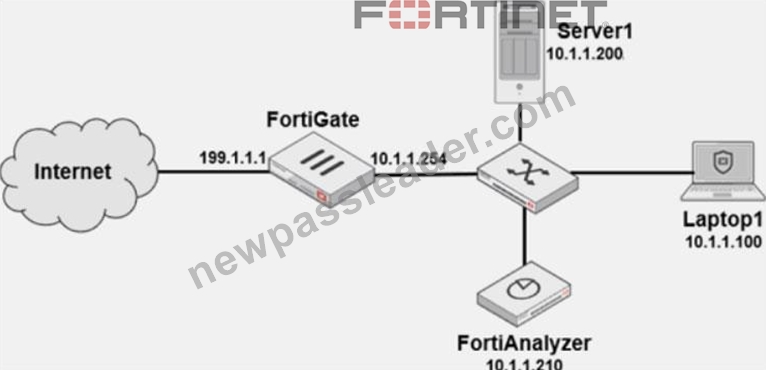
Laptop1 is used by several administrators to manage FortiAnalyzer. You want to configure a generic text filter that matches all login attempts to the web interface generated by any user other than "admin" and coming from Laptop1.
Which filter will achieve the desired result?
- A. operation-login & srcip==10.1.1.100 & dstip==10.1.1.210 & user==admin
- B. operation-login & performed_on=="GUI(10.1.1.210)' & user!=admin
- C. operation-login & performed_on=="GUI(10.1.1.100)" & user!=admin
- D. operation-login & dstip==10.1.1.210 & userl-admin
Answer: C
NEW QUESTION # 32
Which two statements are true regarding FortiAnalyzer log forwarding? (Choose two.)
- A. Forwarding mode forwards logs in real time only to other FortiAnalyzer devices.
- B. In aggregation mode, you can forward logs to syslog and CEF servers as well.
- C. Aggregation mode stores logs and content files and uploads them to another FortiAnalyzer device at a scheduled time.
- D. Both modes, forwarding and aggregation, support encryption of logs between devices.
Answer: C,D
NEW QUESTION # 33
After generating a report, you notice the information you where expecting to see is not included in it.
However, you confirm that the logs are there.
- A. Disable auto-cache.
- B. Check the time frame covered by the report.
- C. Test the dataset
- D. Increase the report utilization quota.
Answer: B,C
Explanation:
When a generated report does not contain the expected information even though the logs are confirmed to be present, it typically indicates an issue with the report's configuration. There are a few common reasons this might happen:
* Option A - Check the Time Frame Covered by the Report:
* Reports are generated based on a specific time frame. If the report's time frame does not cover the period when the relevant logs were collected, those logs won't appear in the report output.
Verifying and adjusting the time frame is essential to ensure the report includes all relevant data.
* Conclusion:Correct.
* Option B - Disable Auto-Cache:
* Auto-cache is designed to improve report generation speed by using cached data. Disabling auto- cache would typically only be relevant if the report is pulling outdated data from cache, but it doesn't directly affect whether specific logs are included in a report.
* Conclusion:Incorrect.
* Option C - Increase the Report Utilization Quota:
* The report utilization quota is related to the resource limits for generating reports. It does not directly influence whether certain data appears in a report. Increasing this quota would help only if there are resource issues preventing the report from completing, not if specific logs are missing from the report.
* Conclusion:Incorrect.
* Option D - Test the Dataset:
* Datasets determine which logs and data fields are pulled into the report. If a dataset is configured incorrectly or does not include the required log fields, it could lead to missing information.
Testing the dataset allows you to verify that it's correctly configured and pulling the expected data.
* Conclusion:Correct.
Conclusion:
* Correct Answer:A. Check the time frame covered by the reportandD. Test the dataset.
* These steps directly address the issues that could lead to missing information in a report when logs are available but not displayed.
References:
* FortiAnalyzer 7.4.1 documentation on report generation settings, time frames, and dataset configuration for accurate report results.
NEW QUESTION # 34
An administrator has configured the following settings:
config system fortiview settings
set resolve-ip enable
end
What is the significance of executing this command?
- A. You must configure local DNS servers on FortiGate for this command to resolve IP addresses on Forti Analyzer.
- B. It resolves the destination IP address to a hostname in FortiView on FortiAnalyzer.
- C. Use this command only if the source IP addresses are not resolved on FortiGate.
- D. It resolves the source and destination IP addresses to a hostname in FortiView on FortiAnalyzer.
Answer: B
NEW QUESTION # 35
Refer to the exhibits.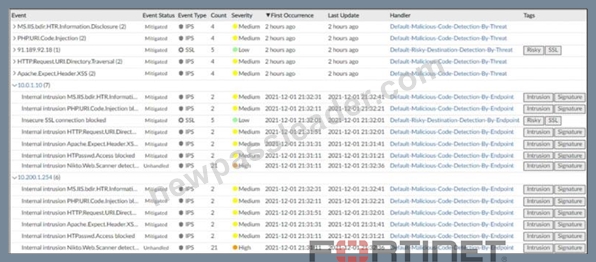
How many events will be added to the incident created after running this playbook?
- A. Five events will be added.
- B. Thirteen events will be added.
- C. Ten events will be added.
- D. No events will be added.
Answer: C
NEW QUESTION # 36
Refer to the exhibit.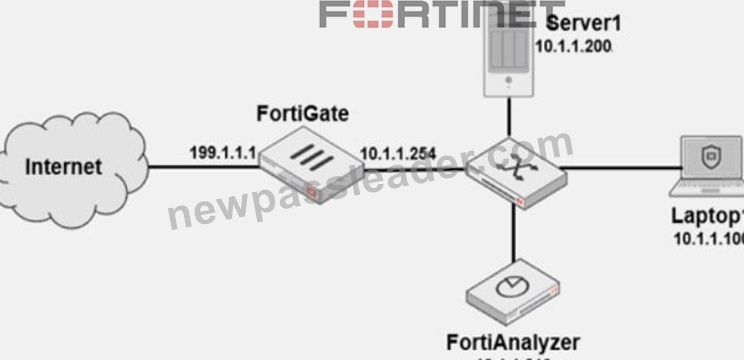
Laptop1 is used by several administrators to manage FortiAnalyzer. You want to configure a generic text filter that matches all login attempts to the web interface generated by any user other than "admin" and coming from Laptop1.
Which filter will achieve the desired result?
- A. operation-login & srcip==10.1.1.100 & dstip==10.1.1.210 & user==admin
- B. operation-login & performed_on=="GUI(10.1.1.210)' & user!=admin
- C. operation-login & performed_on=="GUI(10.1.1.100)" & user!=admin
- D. operation-login & dstip==10.1.1.210 & userl-admin
Answer: C
NEW QUESTION # 37
You are trying to configure a task in the playbook editor to run a report.
However, when you try to select the desired playbook, you do to see it listed.
What is the reason?
- A. The report has no result and must be reconfigured.
- B. You must create a trigger to run the report first.
- C. The report does not have auto-cache and extended log filtering enabled.
- D. The playbook is currently running and will be available after it is finished.
Answer: C
NEW QUESTION # 38
Which two statements are true regarding FortiAnalyzer operating modes? (Choose two.)
- A. Collector mode is the default operating mode.
- B. By deploying different FortiAnalyzer devices with collector and analyzer mode in a network, you can improve the overall performance of log receiving, analysis, and reporting
- C. When in collector mode, FortiAnalyzer collects logs from multiple devices and forwards these logs in the original binary format.
- D. When in collector mode. FortiAnalyzer supports event management and reporting features.
Answer: B,C
NEW QUESTION # 39
Which two statements are true regarding fabric connectors? (Choose two.)
- A. Fabric connectors allow to save storage costs and improve redundancy.
- B. Cloud-Out connections allow you to send real-time logs to pubic cloud accounts like Amazon S3, Azure Blob, and Google Cloud.
- C. Storage connector service does not require a separate license to send logs to cloud platform.
- D. Configuring fabric connectors to send notification to ITSM platform upon incident creation Is more efficient than third-party information from the FortiAnalyzer API.
Answer: B,D
NEW QUESTION # 40
View the exhibit.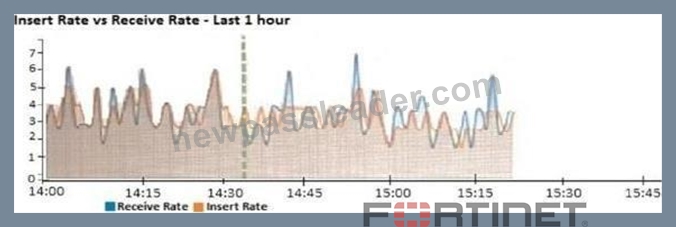
What does the data point at 14:35 tell you?
- A. FortiAnalyzer is dropping logs.
- B. FortiAnalyzer has temporarily stopped receiving logs so older logs' can be indexed.
- C. The sqlplugind daemon is ahead in indexing by one log.
- D. FortiAnalyzer is indexing logs faster than logs are being received.
Answer: C
NEW QUESTION # 41
......
Prepare Top Fortinet FCP_FAZ_AN-7.4 Exam Audio Study Guide Practice Questions Edition: https://pass4lead.newpassleader.com/Fortinet/FCP_FAZ_AN-7.4-exam-preparation-materials.html